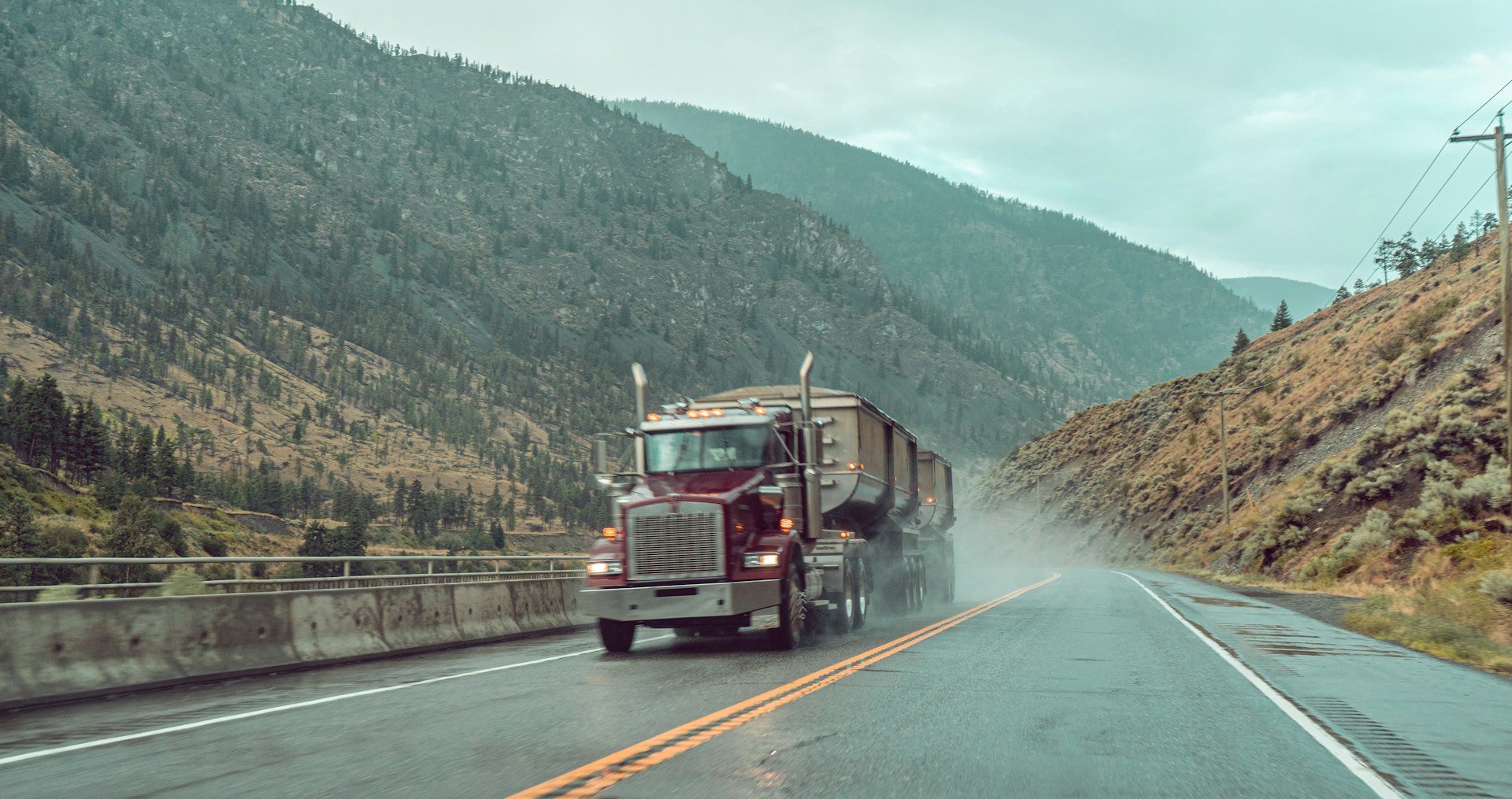
Jackknifing happens when the trailer of a big truck swings out to the side while the cab continues forward, sometimes forming an L or V shape. At that point, the driver has no control. The truck can skid into other vehicles, block traffic entirely, or worse, cause fatal injuries.
So, what exactly are the causes of jackknife accidents in the first place?
- Brake or Tire Failure
Not all jackknife accidents are the driver’s fault, though. Sometimes it’s the truck itself. One of the most common mechanical failures in these crashes is the brakes. If the brakes fail, or even just one wheel locks up, the truck can easily lose balance. The same goes for tires.
A blowout on one tire might not seem like much on a regular car, but on a tractor-trailer, it’s a different story. It can throw off the whole alignment of the truck and cause the trailer to swing sideways.

- Speeding and Sudden Maneuvers
Speeding is a huge part of the problem. When a truck is going too fast, especially on a curve, it becomes really hard to control. A loaded semi-truck can weigh as much as 80,000 pounds.
Now imagine trying to make a sudden stop or quick turn with that much weight behind you. The trailer doesn’t just follow; it swings. That’s how a jackknife starts. And it’s not only about going over the speed limit. Even driving at normal speeds can be too fast if the road is slippery or if traffic suddenly slows down.
- Light or Empty Trailers
Now here’s something that surprises a lot of people: Trucks are actually harder to control when they’re empty. You’d think that less weight means easier handling, right? But in trucking, it’s the opposite.
A light or empty trailer doesn’t have enough weight to grip the road properly. It’s more likely to skid, especially when the driver hits the brakes suddenly or the roads are wet.
This is what drivers call deadheading, i.e., when they’re driving without a load, maybe after making a delivery. If they’re not extra careful, just one mistake, for instance, braking too hard, can cause the trailer to swing out because there’s not enough friction to keep it steady. A more experienced driver might know how to gently steer or ease off the brakes, but not everyone gets it right every time.
- Driver Fatigue and Distraction
Driving a truck is exhausting. Drivers often spend hours and hours on the road, sometimes days at a time. Even though there are rules about how long they can drive without a break, some push themselves, or are pushed by their employers, to keep going.
Distraction is just as dangerous. Some drivers check their phones, adjust the radio, or start eating while driving. All it takes is a few seconds of looking away, and they might not notice traffic slowing down ahead or a curve in the road.
By the time they react, they’re already losing control. And when a truck loses control, it’s not just a tap on the bumper; it’s potentially deadly.
- Poor Road Conditions and Environmental Hazards
The road itself can be a problem. Think of icy streets, wet pavement, or even big potholes. Trucks are heavy and long, which means they don’t handle quick changes very well.
If a truck hits a slick patch or tries to brake on an icy bridge, it’s super easy for the trailer to start sliding. The same goes for curves on a rainy day; if the trailer loses traction, it’s going to swing out, especially if the driver panics and hits the brakes too hard.
Even obstacles in the road can cause problems. Let’s say a deer runs out onto the highway, or there’s a large object in the lane. If the driver swerves quickly to avoid it, they might overcorrect and throw the trailer out of alignment. Now you’ve got a jackknife happening in the middle of traffic.