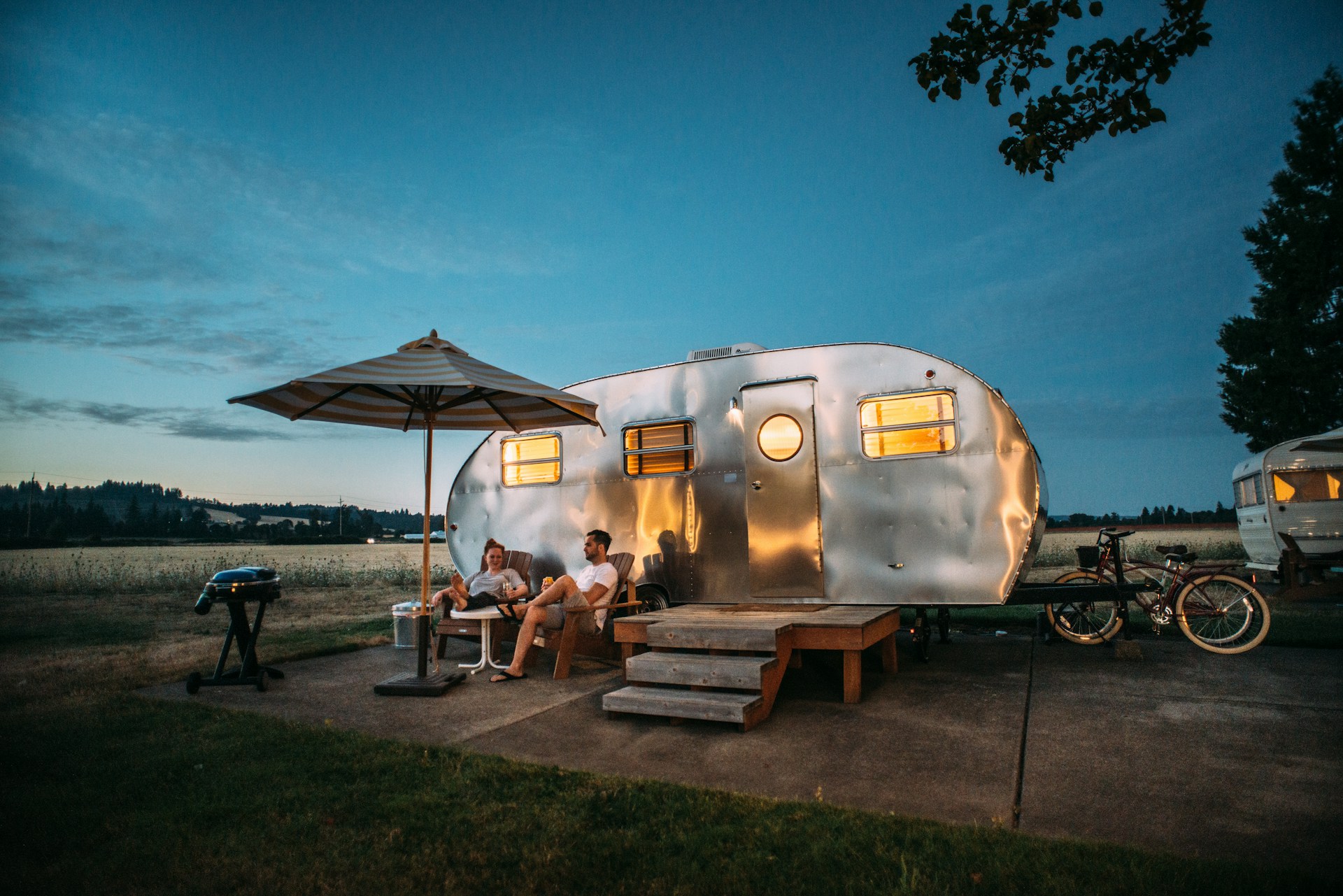
Many recommendations on luxury travel suggest increasing your nightly expenditure. Contrarily, we recommend making one good investment, and then not spending on the same vacation repeatedly. A quality caravan is one of those rare purchases that actually masquerades as an asset instead of a drain on your cash, and when you compare the ongoing costs against accommodation, it’s difficult to seriously maintain that buying top-notch resorts is the wiser alternative.
The spreadsheet nobody shows you on Instagram
High-end travel content is not about numbers, it’s about emotions. However, the numbers actually make sense when you analyze this. Let’s consider a $100,000 luxury caravan, which is a significant investment. Let’s assume you use it seriously, like 60 nights a year over 10 years, which gives you 600 nights of travel for the cost of the investment plus operating costs. It comes to somewhere between $150 and $250 a night once fuel, servicing and site fees are included. And, of course, you will get a decent percentage of that investment back when you sell the caravan again.
Now, a mid-range hotel room in a good location will set you back $250 to $450 a night. A proper luxury suite room is going to be $500-plus before they even add the cost of flipping you a rubber ducky. Use that room for the same 600 nights and you are paying more than $150,000 over the odds and you recoup zilch. Plus, you have to lug your rubber duckies with you each time anyway.
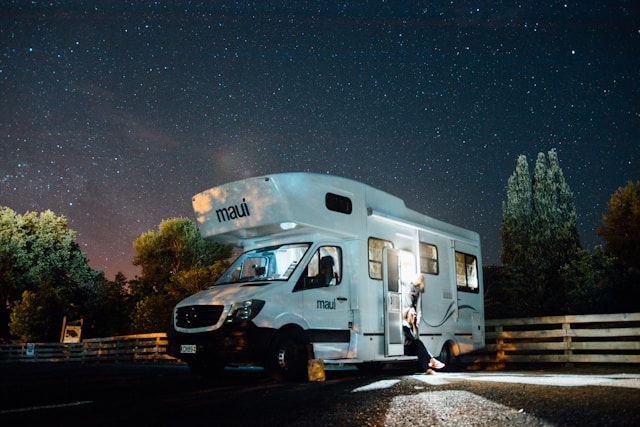
Hotels have costs they don’t put on the room rate
The advertised nightly rate is never the real cost of a hotel stay. Parking is often $40 to $60 a night in cities. Resort fees get bolted on regardless of whether you use the pool. Laundry costs more per load than most people spend on groceries in a week. Mini-bars are priced like they’re the last fridge on earth, and the in-house restaurant markup on a basic breakfast can be double what you’d pay at a café down the road.
A caravan collapses all of that into one number. You’re not paying a nightly premium for parking because you brought your own vehicle. You’re not paying resort fees because there’s no resort – there’s a site, and often a free one. Laundry is a load in your own machine or a $4 token at the caravan park. The kitchen dividend alone is significant: a fully equipped galley with an espresso machine removes two or three restaurant meals a day from the ledger, which on a luxury itinerary is often the single biggest daily expense.
Depreciation is where the real argument lives
Just talk to anyone who has purchased a luxury car or a boat, and they’ll tell you that the moment they drive or sail it off the lot, its value plummets. Quality caravans, specifically well-made Australian ones, do not do this. A well-maintained van can keep 60-70% of its sale value after five to seven years of consistent use, and often more, because the secondhand market demand never really drops off.
And that demand is coming from a particularly lucrative source: grey nomads. Older Australians circumnavigating the country have made sure that the secondhand caravan market is deep, active, and always looking for well-maintained, higher-spec vans. Custom-built and off-road vans keep their value even better again, because buyers in that segment know what they want and are willing to pay for established quality. That’s the part luxury purchases usually don’t get you. A night in a fancy hotel is gone as soon as you check out. Three or four years later, a caravan is a completely different story, and will give you a sizable chunk back.
Location is the luxury nobody can sell you
Let’s face it, the best landscapes in the country – a secluded part of Great Ocean Road, a clifftop in the Red Centre, a bend of the river where nobody’s slapped up a resort yet – are not for sleeping on. They’re either completely hotel-free, or the single existing hotel charges an arm and a leg precisely because there’s only one and demand is high.
A van cuts through all that. You bring your room to the panorama, park, and boom, you’ve got a front-row position that would be going for five hundred bucks a night if it could somehow be cordoned off and roofed. Freedom camping or low-cost designated overnight spots take this further – a proper self-contained luxury van with good off-grid solar and battery doesn’t need a power point, or to book six months in advance, or to arrive in time to nab a free spot before the hotel buses roll in. You’re not renting space. You’re just there.
Families don’t scale the way hotels want them to
Hotel prices are not family-friendly. For a family of five: two rooms, rollaway beds, resort fees per person, breakfast per person – the tab escalates, whether or not you truly desired that second room. Caravans are agnostic about how many people are piled inside of them. The site fee is the same for two people as for six. Fuel costs are identical, whether you drive with an empty passenger seat or not. The only actual marginal cost of an additional family member is groceries, and that’s pennies on the dollar compared to what a hotel charges for an extra warm body.
This is also where pet-friendly travel silently saves you a bundle. This week, I priced boarding for our dog for an upcoming vacation. It would cost more to lodge him than it would us. Guess he’s coming with us in the van.
The honest counter-argument, and why it doesn’t hold up
None of this works if we pretend running a caravan is free. Fuel economy takes a real hit when you’re towing, particularly with a heavier off-road van behind a 4WD or SUV, and that needs to be priced in honestly rather than waved away. Servicing, tyres and general wear on the towing vehicle are ongoing costs too.
But run the comparison properly. Price out flights for a family, airport transfers, taxis at the destination, and a hire car for the week, then stack that against the extra fuel a caravan burns over the same trip. The caravan rarely comes out worse, and it almost never comes out worse by much. You’re comparing a known, fixed cost against a pile of smaller costs that add up faster than people expect.
Buying versus hiring, and when ownership wins
If you’re only taking one trip a year, hiring a van makes sense and nobody should talk you out of it. But for households doing two or more serious trips annually, the maths flips fast. Hire rates for a decent caravan run $150 to $250 a night once insurance and bond are included. Compare that against ownership costs amortised across the same usage, and most buyers cross the break-even point somewhere between year three and year four. After that, every trip is effectively cheaper than the hire equivalent, and you’re also sitting on an asset that’s still worth real money.
This is the stage where the purchase decision actually matters, and it’s worth taking seriously rather than rushing. Fit, finish and build quality vary enormously across the market, and the gap between a van that lasts fifteen years and one that’s falling apart by year five usually comes down to who built it. Anyone ready to commit should compare the Luxury Caravans segment closely – cabinetry, chassis construction, insulation, and how the off-grid systems are integrated – because this is exactly where the depreciation advantage either holds up or quietly disappears.
Health and lifestyle savings that don’t show up on a receipt
There’s another benefit here as well, one that you may not recognize until you have experienced it yourself. If you prepare your dinner almost every evening, you are less likely to eat those high-fat meals at the restaurant, and you have a better idea of your food intake as well. Likewise, if you are frequently outdoors and get enough rest, you are less likely to get ill while on vacation. None of that shows up on a bank statement, but anyone who’s had a holiday derailed by a stomach bug from an unfamiliar restaurant knows it has a cost too.
The bigger picture: this isn’t a fringe choice anymore
Take a step back from the spreadsheet for a moment. According to the Caravan Industry Association of Australia, caravanning and camping contributes more than $23.5 billion to the economy annually. This isn’t a niche pastime keeping a handful of holiday parks afloat. This is a major travel industry that a massive number of people are actively choosing to experience.
And those holiday parks have changed with the demand. Glamping and RV resorts feature ensuite facilities, island kitchens, and real luxury treatment that bears no resemblance to the caravan parks of three decades ago. The perception of caravanning as the cheap, no-frills alternative to actual travel is old-fashioned. The luxury end of the market has matched, and in some ways surpassed, what the typical hotel room can provide.
The real math behind the romance
Strip away the campfire photos and the sunset shots, and what’s left is a straightforward financial case. A luxury caravan costs more upfront than a single hotel stay ever will, but it’s spread across hundreds of nights, holds a meaningful chunk of its value, and hands you locations no amount of hotel spending could buy. Treat it like the asset it actually is, and the “luxury” part stops being a splurge and starts being the smartest line item in the whole travel budget.